

H2 infrastructure: Austria's key to the energy future
According to the Austrian hydrogen strategy, demand for renewable gases such as green hydrogen is set to significantly exceed Austria's production potential by 2040, placing the country at an energy policy turning point. In order to meet this challenge, the necessary infrastructure must be in place to cover domestic demand through imports and enable transit through Austria.
Austria already has an efficient gas pipeline network spanning over 2,000 kilometres, which can be gradually adapted for hydrogen transport – a decisive advantage in helping to quickly and cost-effectively ramp up the hydrogen market.
Austria as a hydrogen hub
As it cannot produce enough green hydrogen itself, Austria is dependent on imports. The planned SoutH₂ Corridor, which will span around 3,300 kilometres, will connect North Africa with Germany via Italy and Austria, and it is considered to be the most promising import route in Europe. GCA's ‘H₂ Backbone WAG + Penta West’ project is an essential part of the SoutH₂ Corridor. This will enable Austria to play a key role as a transit country and energy hub in Central Europe. Access to low-cost green hydrogen will strengthen security of supply and the competitiveness of domestic industry. This further cements Austria's position as Europe's hydrogen hub, while also ensuring the long-term needs of Austrian industry are met.
H₂ ramp-up account creates investment security for grid expansion
One suitable instrument for enabling the necessary infrastructure investments could be the introduction of a state-guaranteed H₂ ramp-up account. This temporary financing instrument would be offset by an account-keeping agency, which would balance the differences between approved grid costs and actual revenues from ramp-up tariffs – secured by a state guarantee. This would enable investments to be implemented quickly without placing a burden on the state budget.
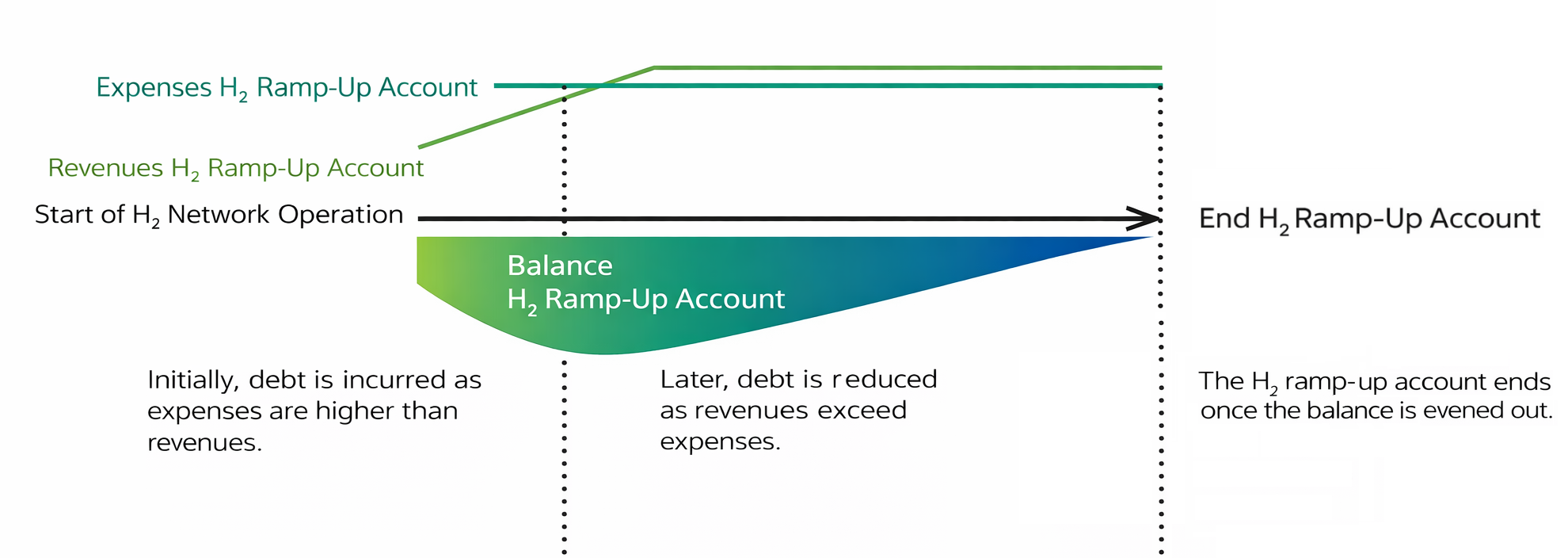
The model meets the requirements of the currently applicable EU legal framework and offers significant advantages:
- Investment security for network operators by hedging ramp-up risk
- Market-compatible network tariffs thanks to favourable financing conditions
- Budget-friendly implementation, as the state guarantee does not directly impact the budget.
- Predictability for the gradual ramp-up of the H₂ market.
The H₂ ramp-up account is a pragmatic and budget-friendlyproposal that encourages investment. It lays the groundwork for the efficient, plannable development of Austria's hydrogen infrastructure in line with European requirements, serving the interests of the economy, the climate and security of supply. Gas Connect Austria is committed to dialogue and works closely with relevant stakeholders to develop a sustainable industry model together.
A plan for Austria's future
Developing a hydrogen infrastructure is a vital strategic step towards ensuring the industrial location has access to renewable energy at competitive prices. 450,000 jobs, €260 billion in production value and €50 billion in added value depend on it. A robust industrial strategy requires a robust hydrogen strategy, complemented by the proposed H2 import strategy, to promote infrastructure development, bolster domestic value creation, and ensure supply security.
With the appropriate political support, Gas Connect Austria can contribute to making Austria hydrogen-ready.
Further information on this topic can be found here (in German)